In recent years, data has shifted from a supporting role to the core of strategic design in professional sports.
The proliferation of tracking systems and wearable sensors means athletes’ movements, speeds, and exertion levels are constantly recorded as numerical data.
In baseball, metrics like pitch spin rates, batted ball angles, and defensive ranges have been quantified, turning what was once described intuitively into verifiable information shared across the sport.
How Sports Data Has Transformed Competition, Strategy, and Understanding?
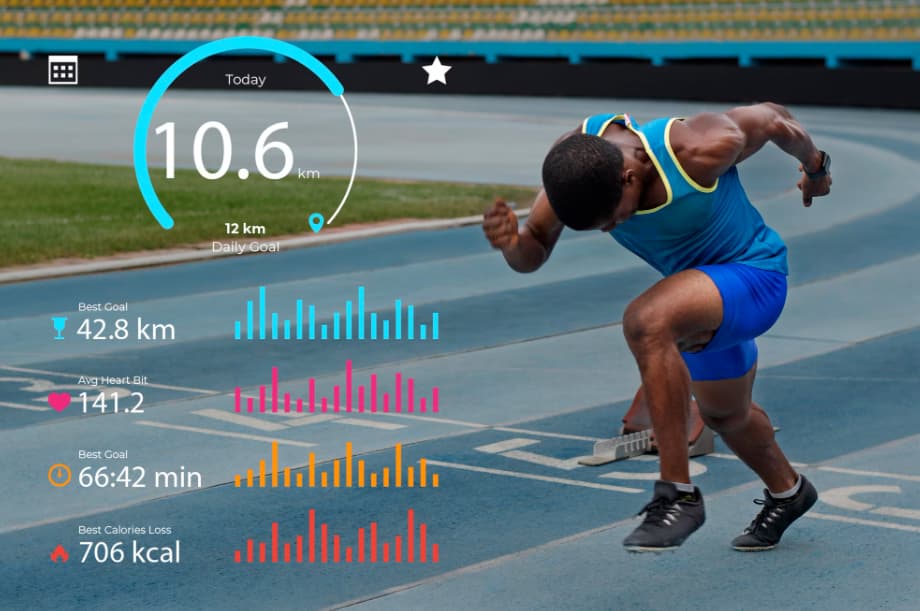
AI-driven analysis extracts play reproducibility and trends, serving as a tool to predict future performance shifts. However, data is not omnipotent.
In most settings, numbers are not treated as definitive answers but rather as material to narrow decision-making options.
Experience and intuition remain integral; the defining feature of current competitive strategy lies in data being incorporated as a foundation supporting verifiable hypotheses.
How Data Analysis is Utilized in WBC Betting?
The World Baseball Classic, held every four years in March 2026, is the event that determines the world champion in baseball.
This tournament is a short, intense competition spanning about two weeks, where information on national teams is limited.
Consequently, it is difficult to rely on the long-term data accumulation typical of regular seasons, making the ability to instantly read changes during games crucial.
Factors like pitch counts, pitching changes, the order of batters, and the bullpen’s remaining pitchers serve as indicators of the game’s flow, often more revealing than the score itself.
In this context, WBC betting in Japan is frequently cited as a good reference. In Japan, data-driven commentary has long been established in baseball broadcasts and reporting.
A mindset focused on structurally understanding games is deeply rooted in the spectator culture. Extending from this, betting also tends to prioritize grasping game developments over emotional predictions.
Here, the process of deciphering the game through data holds greater significance than the act of betting itself. Data analysis functions not to predict outcomes, but as an auxiliary tool to deepen understanding of the game.
How Have the Latest Analytical Tools Changed Team Management?
In the field of team management, video analysis software and automatic tagging technology have become indispensable.
Game footage is instantly broken down, visualizing tendencies per play and the opposing team’s weaknesses.
Pre-game tactical analysis is conducted for each opponent, and real-time, updated data is shared on the bench.
Even so, the final decisions are made by humans. On the coaching sidelines, the trends revealed by data are combined with the intuition needed to read players’ physical and mental states.
Data utilization also impacts player development, enabling selection decisions based on long-term growth trajectories.
This operational framework, less swayed by short-term results, is supported by analytical technology.
How Data is Changing the Sports Viewing Experience?
The spectator’s role has also undergone significant change.
Live stats and second-screen viewing have become commonplace, allowing viewers to track numbers simultaneously while watching the game.
Understanding not just the score, but why the game unfolded as it did, has become part of the viewing experience.
Emotional support and analytical understanding are not mutually exclusive.
The ability to interpret data heightens the tension of the match and the subtleties of tactics, enhancing immersion and intellectual satisfaction.
Sport is shifting from merely observing outcomes to understanding the process.
Data is quietly rewriting the roles not only of the competitors, but also of the spectators.
About the Author