Here’s a number that puts everything in perspective: the all-time leading run-scorer in women’s Test cricket accumulated 1,935 runs across a career spanning nearly two decades.
That sounds modest compared to men’s records, right? But women’s Test matches have been sporadic at best — entire decades passed with only a handful of fixtures.
Every single run in this format was earned in conditions where opportunities were scarce and margins for error were thin.
If you’re looking for the players with most runs in women’s Test cricket, you’re really looking at the athletes who made the absolute most of every innings they were given.
This list spans from the 1930s to the modern era, covering nine cricketers who crossed the 1,000-run milestone.
Players with Most Runs in Women’s Test Cricket
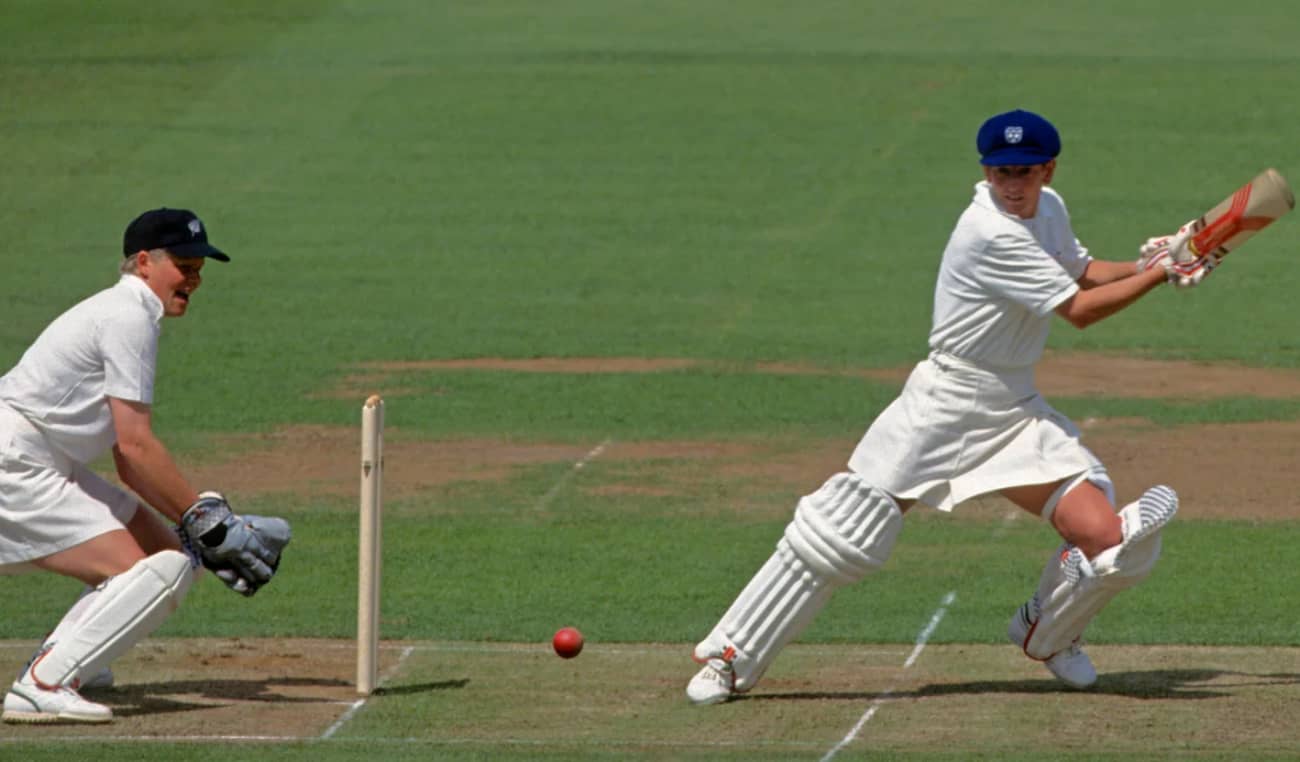
Let’s break down who they are, what they achieved, and why their numbers deserve far more attention than they typically receive.
Top 9 All-Time Run-Scorers in Women’s Test Cricket
| Rank | Player | Country | Span | Matches | Innings | Runs | Highest Score | Average | 100s | 50s |
|---|---|---|---|---|---|---|---|---|---|---|
| 1 | Janette Brittin | England | 1979–1998 | 27 | 44 | 1,935 | 167 | 49.61 | 5 | 11 |
| 2 | Charlotte Edwards | England | 1996–2015 | 23 | 43 | 1,676 | 117 | 44.10 | 4 | 9 |
| 3 | Rachael Heyhoe-Flint | England | 1960–1979 | 22 | 38 | 1,594 | 179 | 45.54 | 3 | 10 |
| 4 | Debbie Hockley | New Zealand | 1979–1996 | 19 | 29 | 1,301 | 126* | 52.04 | 4 | 7 |
| 5 | Carole Hodges | England | 1984–1992 | 18 | 31 | 1,164 | 158* | 40.13 | 2 | 6 |
| 6 | Sandhya Agarwal | India | 1984–1995 | 13 | 23 | 1,110 | 190 | 50.45 | 4 | 4 |
| 7 | Enid Bakewell | England | 1968–1979 | 12 | 22 | 1,078 | 124 | 59.88 | 4 | 7 |
| 8 | Sarah Taylor | England | 1999–2009 | 15 | 27 | 1,030 | 177 | 41.20 | 4 | 2 |
| 9 | Molly Maclagan | England | 1934–1951 | 14 | 25 | 1,007 | 119 | 41.95 | 2 | 6 |
Profile Breakdown: What Made Each Player Special
- Janette Brittin — England’s Quiet Dominator
Janette Brittin didn’t just top the list of players with most runs in women’s Test cricket; she lapped the field. Her 1,935 runs came with five centuries and eleven fifties, a conversion rate that reveals a player who never settled for starts. Playing from 1979 to 1998, she outlasted entire generations. Her highest score of 167 wasn’t just a personal best — it was a statement about what patience and footwork could achieve in a format that demands both.
- Charlotte Edwards — The Captain Who Led from the Front
Charlotte Edwards brought a level of professionalism that women’s Test cricket had rarely seen. Her 1,676 runs at an average of 44.10 reflect not just talent but consistency across a 19-year international career. Edwards combined elegant timing with the temperament to anchor long innings — exactly what the format requires. She also captained England through a transformative period, making her impact go well beyond the scorecard.
- Rachael Heyhoe-Flint — The Pioneer Who Refused to Be Overlooked
Rachael Heyhoe-Flint scored 1,594 runs at a time when women’s cricket received almost no institutional support. Playing from 1960 to 1979, she was often the most visible advocate for the women’s game. Her highest score of 179 was a testament to her big-match temperament. Beyond batting, she was instrumental in getting women’s cricket into the broader public consciousness — a legacy no statistics can fully capture.
- Debbie Hockley — New Zealand’s Finest
Debbie Hockley remains New Zealand’s most prolific Test batter with 1,301 runs and an impressive average of 52.04. She had a rare ability to absorb pressure and build innings methodically. Her unbeaten 126* showed the kind of composure that separates good players from great ones. For New Zealand fans, Hockley set a standard that still defines the country’s batting tradition in red-ball cricket.
- Carole Hodges — The Aggressor in a Patient Format
Carole Hodges didn’t play Test cricket the way most people expected. Her 1,164 runs included an unbeaten 158, and she was known for taking the attack to bowlers even on slow, deteriorating surfaces. That aggressive instinct didn’t come at the cost of consistency — she averaged 40.13 across 18 Tests, proving that intent and discipline aren’t mutually exclusive.
- Sandhya Agarwal — India’s Test Cricket Trailblazer
For Indian cricket fans, Sandhya Agarwal’s name carries special weight. With 1,110 runs in just 13 Tests — fewer matches than anyone else in the top eight — her output per game was remarkable. Her highest score of 190 stood as the highest individual score by an Indian woman in Test cricket for years. Agarwal’s average of 50.45 tells the story: when she walked out to bat, she made it count. She remains the standard-bearer for Indian players with most runs in women’s Test cricket, and her legacy directly influenced the generation that followed, including the current wave of Indian women’s cricketers making headlines in all formats.
- Enid Bakewell — The All-Round Genius
Enid Bakewell’s batting average of 59.88 is the highest on this entire list — and it came in just 12 matches. She scored 1,078 runs while also being a world-class bowler, making her one of the most complete cricketers the women’s game has ever produced. On her Test debut, she scored a century and took five wickets. That kind of all-round performance is rare in any era, in any format.
- Sarah Taylor — Style Meets Substance
Sarah Taylor brought a fluency to Test batting that made her appointment viewing. Her 1,030 runs included a stunning 177, and her ability to time the ball made even the most challenging bowling attacks look manageable. Taylor was also one of the finest wicketkeepers in the women’s game, adding another dimension to her value. Her career, while relatively brief in Tests, was defined by quality over quantity.
- Molly Maclagan — Laying the Foundation
Molly Maclagan’s career stretched from 1934 to 1951, making her one of the earliest figures in organised women’s Test cricket. She scored 1,007 runs at an average of 41.95 — numbers that are even more impressive given how few resources and opportunities existed for women cricketers in that era. Maclagan’s contributions helped establish the template that future English batters would follow.
Why Do These Records Still Matter in 2025?
Women’s Test cricket remains rare. Most nations play only one or two red-ball matches per year, if that. So why should anyone care about career run tallies in a format that barely exists on the calendar?
Three reasons stand out.
- First, these numbers represent genuine endurance. Scoring 1,000-plus runs in a format where you might play only one or two matches a year — and sometimes none at all for years — requires a career built on sustained excellence, not just a hot streak.
- Second, the quality of Test batting translates directly to other formats. Players like Sarah Taylor and Charlotte Edwards used the discipline honed in red-ball cricket to dominate in ODIs and T20s as well. The fundamentals don’t change; the patience just gets compressed.
- Third, there’s a growing push to expand the women’s Test schedule. The ICC has been under increasing pressure to schedule more red-ball fixtures. If that happens, the current records will become benchmarks for a new generation — and knowing where the bar sits matters.
Could Anyone Break These Records?
India’s Shafali Verma, Australia’s Beth Mooney, and England’s Heather Knight all have the talent to challenge these numbers if they get enough Test opportunities.
But that’s the catch — “if.” With bilateral Test series still limited, overtaking Janette Brittin’s 1,935 runs would require a decade of consistent selection and fitness.
The most realistic near-term shift? Sandhya Agarwal’s position as the leading Indian run-scorer in Tests could be challenged as India schedules more red-ball matches.
But her record of 1,110 runs in just 13 matches sets an extraordinarily high bar for per-match output.
FAQs
Who has scored the most runs in women’s Test cricket?
Janette Brittin of England holds the record with 1,935 runs in 27 Test matches between 1979 and 1998.
Which Indian player has the most runs in women’s Test cricket?
Sandhya Agarwal leads India’s Test run-scoring charts with 1,110 runs at an average of 50.45 across 13 matches.
What is the highest individual score in women’s Test cricket?
Pakistan’s Kiran Baluch holds the record with 242*. Among the players on this list, Sandhya Agarwal’s 190 is the highest individual score by an Indian.
How many women have scored over 1,000 runs in Test cricket?
Nine players have crossed the 1,000-run mark in women’s Test cricket. Six of them are from England.
Why are women’s Test matches so rare?
Commercial priorities, the popularity of T20 leagues, and scheduling constraints have meant that red-ball cricket for women receives far fewer fixtures than the shorter formats.
Which country dominates the all-time run-scoring list?
England dominates, with six of the top nine all-time run-scorers representing the team.
Final Thought
The players with most runs in women’s Test cricket didn’t accumulate those numbers through volume — they earned them through decades of excellence in a format that gave them precious few chances.
For Indian fans, Sandhya Agarwal’s presence in the top six is a reminder that India’s women’s cricket heritage runs deeper than the current generation’s success suggests.
These records are worth knowing, worth preserving, and worth celebrating.
About the Author