Put the weekly wage of football’s highest earner next to the annual salary of a surgeon, a lawyer, or a senior engineer, and the numbers become genuinely hard to process.
Cristiano Ronaldo earns more in a single week than most people make across an entire career.
And the gap between him and tenth place on this list — Sadio Mané at a comparatively modest £750,000 per week – is wider than the gap between Mané and a Premier League squad player earning £50,000 a week.
Football wages have always been high. What’s changed in the last three years is where the money comes from.
Saudi Arabia’s Public Investment Fund didn’t just enter the football market — it rewrote the economics of it.
Six of the top 10 highest paid footballers in the world in 2026 either play in Saudi Arabia now or moved there at the point that locked in their earnings tier.
Highest Paid Footballers in the World 2026
What follows is the complete breakdown: weekly wages, estimated monthly pay, annual salary from club contracts, and total income, including sponsorships, for every player in the top 10.
Top 10 Highest Paid Footballers in the World 2026 — Complete Salary
| Rank | Player | Club | Weekly Wage | Est. Monthly Pay | Est. Annual Salary |
|---|---|---|---|---|---|
| 1 | Cristiano Ronaldo | Al Nassr | £3,400,000 | £14,733,333 | £176,800,000 |
| 2 | Lionel Messi | Inter Miami | £2,500,000 | £10,833,333 | £130,000,000 |
| 3 | Neymar Jr. | Al Hilal | £2,000,000 | £8,666,667 | £104,000,000 |
| 4 | Karim Benzema | Al Ittihad | £1,600,000 | £6,933,333 | £83,200,000 |
| 5 | Kylian Mbappé | Real Madrid | £1,200,000 | £5,200,000 | £62,400,000 |
| 6 | Kevin De Bruyne | Al Qadsiah | £1,000,000 | £4,333,333 | £52,000,000 |
| 7 | Mohamed Salah | Liverpool | £950,000 | £4,116,667 | £49,400,000 |
| 8 | Erling Haaland | Manchester City | £875,000 | £3,791,667 | £45,500,000 |
| 9 | Robert Lewandowski | Barcelona | £800,000 | £3,466,667 | £41,600,000 |
| 10 | Sadio Mané | Al Nassr | £750,000 | £3,250,000 | £39,000,000 |
Methodology: Monthly figures are calculated as (weekly wage × 52) ÷ 12. Annual salary reflects club wages only. Total annual earnings including sponsorships, image rights, and commercial income are detailed in the individual profiles and the comparison table below.
Wages Alone Don’t Tell the Full Story
For most workers, salary is income. For the players on this list, salary is the starting point.
Ronaldo’s CR7 fragrance and hotel brands operate independently of Al Nassr entirely.
Messi’s Inter Miami deal includes an equity stake and a revenue-sharing mechanism tied to Apple’s MLS broadcasting growth — meaning he earns more as the league grows, not just as a fixed wage recipient.
Mbappé’s Nike relationship predates his senior career and is reportedly worth over £25 million annually on its own.
The table below shows where wages end and total earnings begin.
| Player | Annual Wages (Est.) | Total Annual Earnings (Est.) | Commercial/Sponsorship Premium |
|---|---|---|---|
| Cristiano Ronaldo | £176,800,000 | £200,000,000+ | £23,200,000+ |
| Lionel Messi | £130,000,000 | £120,000,000 | Equity/revenue model (variable) |
| Neymar Jr. | £104,000,000 | £95,000,000 | Reduced due to injury |
| Karim Benzema | £83,200,000 | £85,000,000 | ~£1,800,000 |
| Kylian Mbappé | £62,400,000 | £90,000,000 | ~£27,600,000 |
| Kevin De Bruyne | £52,000,000 | £50,000,000 | Below wage (modest commercial profile) |
| Mohamed Salah | £49,400,000 | £70,000,000 | ~£20,600,000 |
| Erling Haaland | £45,500,000 | £50,000,000 | ~£4,500,000 |
| Robert Lewandowski | £41,600,000 | £45,000,000 | ~£3,400,000 |
| Sadio Mané | £39,000,000 | £40,000,000 | ~£1,000,000 |
The Mbappé figure is worth sitting with. His weekly wage places him fifth. His total earnings place him third.
That £27.6 million sponsorship gap is almost entirely Nike — a deal structured around long-term career trajectory rather than a one-off campaign fee.
Player Profiles: The Full Breakdown
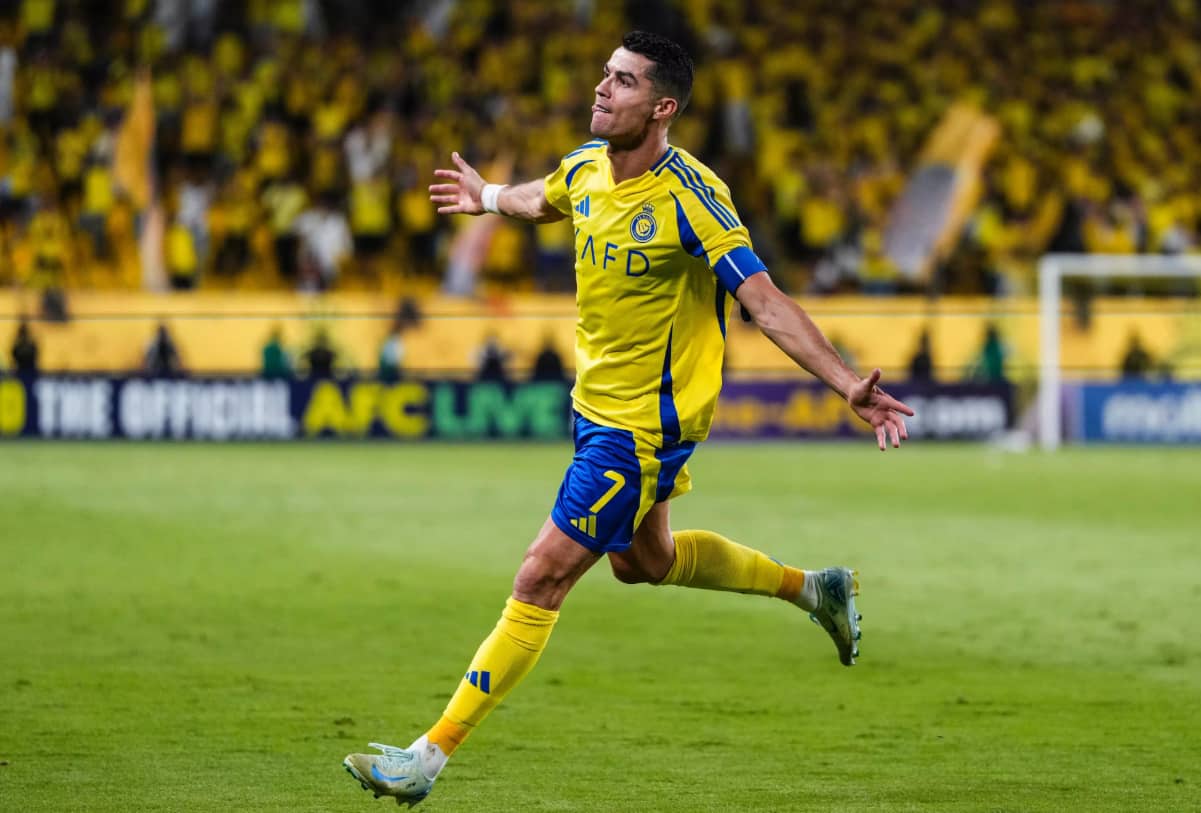
1. Cristiano Ronaldo — £3,400,000 Per Week
| Detail | Figure |
|---|---|
| Club | Al Nassr (Saudi Arabia) |
| Weekly Wage | £3,400,000 |
| Monthly Earnings | £14,733,333 |
| Annual Salary | £176,800,000 |
| Total Annual Earnings | £200,000,000+ |
| Key Sponsors | Nike, Herbalife, Binance, Clear, CR7 |
Ronaldo signed with Al Nassr in January 2023 and immediately became the highest paid athlete in team sport history.
The contract isn’t a simple wage arrangement — it reportedly includes performance bonuses, image rights revenue, and a component connected to Saudi tourism promotion, which is why the headline weekly figure understates the full package.
What makes the deal sustainable from Saudi Arabia’s perspective isn’t purely football. Ronaldo’s Instagram following is the largest of any account on the platform.
His mere presence generates media coverage, tourism interest, and brand association for Saudi Arabia that would cost far more to replicate through conventional advertising.
At 41, he continues to score. The commercial infrastructure he’s built — CR7-branded fragrances, hotels, clothing, and footwear — generates income entirely separate from any club wage and will continue to do so long after his playing career ends.
2. Lionel Messi — £2,500,000 Per Week
| Detail | Figure |
|---|---|
| Club | Inter Miami (MLS) |
| Weekly Wage | £2,500,000 |
| Monthly Earnings | £10,833,333 |
| Annual Salary | £130,000,000 |
| Total Annual Earnings | ~£120,000,000 |
| Key Sponsors | Adidas, Pepsi, Budweiser, Hard Rock, Saudi Tourism |
Messi’s deal with Inter Miami is structured less like a footballer’s contract and more like a founder’s equity arrangement.
The package includes an ownership stake in the club, participation in MLS revenue growth tied to Apple’s Season Pass, and ongoing Adidas equity benefits negotiated over decades of partnership.
It’s one of the reasons his total earnings land slightly below his nominal annual wage figure — the value is partly deferred and asset-based rather than immediate cash.
Over a five-year window, the equity component could be worth considerably more than the salary figure suggests.
His commercial portfolio has remained remarkably stable.
Adidas, Pepsi, and Budweiser have been part of the picture for years, and the 2022 World Cup win with Argentina gave every existing deal a meaningful price revision at renewal.
3. Neymar Jr. — £2,000,000 Per Week
| Detail | Figure |
|---|---|
| Club | Al Hilal (Saudi Arabia) |
| Weekly Wage | £2,000,000 |
| Monthly Earnings | £8,666,667 |
| Annual Salary | £104,000,000 |
| Total Annual Earnings | ~£95,000,000 |
| Key Sponsors | Puma, Red Bull, PokerStars, Qatar Airways |
Neymar is a complicated entry on this list. The wage is real. The appearances haven’t been.
A serious knee injury following his move to Al Hilal in 2023 kept him sidelined for the majority of his time in Saudi Arabia, and the commercial knock-on has been visible — total earnings sit roughly £9 million below annual wages because injury reduces brand exposure and can trigger performance-linked clauses in commercial contracts.
The underlying commercial ceiling for Brazilian athletes is higher than almost any other nationality in global sport.
Neymar’s recovery and return to form would restore much of the sponsorship premium quickly. The question has been, and remains, fitness.
4. Karim Benzema — £1,600,000 Per Week
| Detail | Figure |
|---|---|
| Club | Al Ittihad (Saudi Arabia) |
| Weekly Wage | £1,600,000 |
| Monthly Earnings | £6,933,333 |
| Annual Salary | £83,200,000 |
| Total Annual Earnings | ~£85,000,000 |
| Key Sponsors | Adidas, Hyundai, EA Sports |
Benzema’s Saudi deal was one of the first high-profile signings that signalled the league meant serious business.
He left Real Madrid in the summer of 2023 as reigning Ballon d’Or winner — not a player past his peak, but one at the very top of it — which changed the narrative around Saudi football considerably.
His commercial profile is steady rather than expansive.
The Adidas and EA Sports relationships are long-term and valuable, but Benzema has never courted the kind of lifestyle brand deals that Ronaldo or Neymar pursue.
The contract wage does most of the heavy lifting in his total earnings figure.
5. Kylian Mbappé — £1,200,000 Per Week
| Detail | Figure |
|---|---|
| Club | Real Madrid |
| Weekly Wage | £1,200,000 |
| Monthly Earnings | £5,200,000 |
| Annual Salary | £62,400,000 |
| Total Annual Earnings | ~£90,000,000 |
| Key Sponsors | Nike, Hublot, EA Sports, Dior |
Mbappé is the only player inside the top five with the majority of his career still ahead of him.
His move to Real Madrid in 2024 was the logical conclusion of years of speculation, and the wage he commands there — while lower than the Saudi trio above him — is augmented by a sponsorship portfolio that puts his total earnings third on the full list.
The Nike deal is the key variable. Mbappé has been a Nike athlete since his early teens, and the arrangement has grown with his profile.
At 26, with Champions League campaigns at the biggest club in the world ahead of him, the commercial ceiling hasn’t been approached yet.
Real Madrid’s marketing operation also means that Mbappé benefits from institutional brand support that players at smaller clubs simply don’t receive.
6. Kevin De Bruyne — £1,000,000 Per Week
| Detail | Figure |
|---|---|
| Club | Al Qadsiah (Saudi Arabia) |
| Weekly Wage | £1,000,000 |
| Monthly Earnings | £4,333,333 |
| Annual Salary | £52,000,000 |
| Total Annual Earnings | ~£50,000,000 |
| Key Sponsors | Nike, Therabody, Wow Hydrate |
De Bruyne’s contract at Al Qadsiah more than doubled what he earned at Manchester City — the standard outcome for elite European players who make the Saudi move in their early 30s.
He was the best central midfielder in the Premier League for the better part of a decade, and the Saudi league paid accordingly to secure his signature.
His commercial income is modest relative to some peers.
De Bruyne’s public persona is understated, and the Belgian market — while passionate about football — doesn’t generate the kind of global brand leverage that Egyptian, Brazilian, or French athletes command. Wages do most of the work here.
7. Mohamed Salah — £950,000 Per Week
| Detail | Figure |
|---|---|
| Club | Liverpool |
| Weekly Wage | £950,000 |
| Monthly Earnings | £4,116,667 |
| Annual Salary | £49,400,000 |
| Total Annual Earnings | ~£70,000,000 |
| Key Sponsors | Adidas, Pepsi, Vodafone Egypt, BetVictor |
Salah’s Liverpool contract extension was one of the most discussed deals in recent Premier League history, partly because of the Saudi interest that made it necessary and partly because of the wage required to secure it.
The £950,000 per week figure made him the highest paid player in the club’s history and the top earner in English football.
What’s less discussed is how his commercial income skews the total picture.
That £20 million-plus gap between wages and total earnings comes from sponsorships that tap into markets most European-based players can’t access.
In Egypt and across the Arab world, Salah occupies a cultural position that translates into premium brand deals specifically targeting those regions.
Adidas, Pepsi, and Vodafone Egypt are the anchors. But the broader value of his regional reach goes well beyond any single deal.
8. Erling Haaland — £875,000 Per Week
| Detail | Figure |
|---|---|
| Club | Manchester City |
| Weekly Wage | £875,000 |
| Monthly Earnings | £3,791,667 |
| Annual Salary | £45,500,000 |
| Total Annual Earnings | ~£50,000,000 |
| Key Sponsors | Nike, Hyperice, Samsung Norway, Amer Sports |
Every other player in this top 10 is either past 30 or approaching it. Haaland is 25.
His presence here isn’t the result of a final high-value contract or a Saudi premium — it’s because Manchester City decided his market value was simply this high, at this age, based on what he does on a football pitch.
The 36-goal Premier League debut season set a record that reframed expectations for what a centre-forward could produce in English football.
The commercial profile is growing in step — Nike, Hyperice, Samsung Norway — though it remains relatively contained compared to players with larger global followings.
That’s unlikely to hold. A player this young, this productive, and this consistent will attract brand attention that scales considerably over the next five years.
9. Robert Lewandowski — £800,000 Per Week
| Detail | Figure |
|---|---|
| Club | Barcelona |
| Weekly Wage | £800,000 |
| Monthly Earnings | £3,466,667 |
| Annual Salary | £41,600,000 |
| Total Annual Earnings | ~£45,000,000 |
| Key Sponsors | Nike, Gatorade, Huawei, Golden Boy Cosmetics |
Lewandowski is 36 and still the first choice at Barcelona.
That alone is a statistical outlier — most elite strikers decline sharply after 33 — and his wages reflect a club that has seen enough consistency from him to keep paying top-tier rates.
His commercial footprint is geographically concentrated in Central and Eastern Europe, where he’s the most recognisable footballer by some distance.
The Huawei and Gatorade partnerships have been stable for years and represent steady long-term revenue rather than short-term campaign spends.
It’s a quieter commercial operation than most on this list, but a durable one.
10. Sadio Mané — £750,000 Per Week
| Detail | Figure |
|---|---|
| Club | Al Nassr (Saudi Arabia) |
| Weekly Wage | £750,000 |
| Monthly Earnings | £3,250,000 |
| Annual Salary | £39,000,000 |
| Total Annual Earnings | ~£40,000,000 |
| Key Sponsors | New Balance, Western Union |
Mané earns roughly four times his Bayern Munich wage at Al Nassr.
Saudi Arabia gave him something the European market couldn’t at that stage of his career — a salary that matched his standing as one of the best African footballers of his generation, at a point when European clubs would have offered diminishing returns.
His commercial operation is lean compared to most top-10 earners.
New Balance and Western Union are the main anchors.
But Mané’s reputation off the pitch — his personal funding of a hospital and school in Senegal drew widespread coverage — generates a kind of authentic goodwill that most paid campaigns struggle to manufacture, and that has its own quiet commercial value.
The Players Closest to Breaking In
The gap between tenth place and the following group is smaller than it looks.
| Player | Club | Est. Weekly Wage | Why They Could Move Up |
|---|---|---|---|
| Antoine Griezmann | Atletico Madrid | £700,000 | Contract renewal due; consistent La Liga performer |
| Harry Kane | Bayern Munich | £650,000 | Top scorer in Bundesliga; next deal will reflect that |
| Vinícius Júnior | Real Madrid | £600,000 | Under 25, at peak commercial trajectory |
| Jude Bellingham | Real Madrid | £600,000 | Next contract negotiation likely to push wages sharply higher |
| Phil Foden | Manchester City | £600,000 | Highest paid homegrown City player; approaching prime years |
Vinícius and Bellingham are the two names most likely to enter the top 10 by 2027 or 2028.
Both play for Real Madrid, which provides commercial infrastructure, Champions League exposure, and global media reach that accelerates brand building considerably. Their next contracts will be the ones to watch.
What Saudi Arabia Has Actually Done to Football Wages?
Three years ago, this list was dominated by European clubs.
Now Saudi Arabia accounts for six of the ten positions. That shift didn’t happen by accident.
The Public Investment Fund — Saudi Arabia’s sovereign wealth fund — backs the country’s four major football clubs directly.
This removes the financial constraint that governs every commercially operated club in Europe.
Manchester City, PSG, and Chelsea operate within revenue-based models.
Saudi clubs operate within a government strategy model, where the objective is geopolitical and reputational rather than commercial profit.
For Vision 2030 — Saudi Arabia’s long-term plan to diversify beyond oil — elite football serves several purposes: tourism promotion, global soft power, entertainment infrastructure, and domestic employment.
Wages that look irrational by football economics are rational by those broader metrics.
The open question is sustainability. Every player in the Saudi top tier is over 30 or approaching it.
The league attracts the final peak of elite careers, not the rising ones.
Until a player of Mbappé or Vinícius’s age and status chooses the Saudi league over Real Madrid or City, the ceiling on the league’s global prestige remains visible.
FAQs
- Who is the highest paid footballer per week in 2026?
Cristiano Ronaldo earns the most per week of any footballer in the world — approximately £3.4 million at Al Nassr in Saudi Arabia. That translates to roughly £14.7 million per month and £176.8 million per year in club wages alone.
- Which footballers play in Europe and still make the top 10?
Three players in the top 10 still compete in European leagues: Kylian Mbappé at Real Madrid (£1.2 million per week), Mohamed Salah at Liverpool (£950,000 per week), and Erling Haaland at Manchester City (£875,000 per week). Robert Lewandowski at Barcelona (£800,000 per week) is the fourth.
- How much does Cristiano Ronaldo earn per year in total?
Ronaldo’s estimated total annual earnings — including wages, Nike deal, Herbalife partnership, Binance arrangement, and his CR7 brand (fragrances, hotels, clothing) — exceed £200 million per year, making him the highest paid sportsperson on earth.
- Why does Mbappé rank third in total earnings despite being fifth in wages?
Mbappé’s Nike deal — reportedly worth over £25 million annually — closes most of the gap. Unlike players whose sponsorship income closely tracks their wage level, Mbappé built a major commercial profile before his salary reflected his full market value. That Nike relationship now adds nearly £28 million to his annual wage figure.
- Are these wages realistic, given what clubs can actually afford?
For Saudi clubs, yes — they’re backed by sovereign wealth and operate outside conventional football economics. For European clubs like Manchester City and Liverpool, wages like Haaland’s and Salah’s are exceptional but within reach for clubs with £700 million-plus annual revenues. The outliers are the Saudi figures, which most European clubs cannot compete with on a like-for-like basis.
What is the lowest weekly wage in the top 10?
Sadio Mané earns the least in the top 10 at approximately £750,000 per week at Al Nassr, which still equates to £3.25 million per month and £39 million per year from wages alone.
Conclusion:
The top 10 highest paid footballers in the world in 2026 split cleanly into two groups.
Saudi Arabia offers wages that no European club can match, attracting players whose peak earning years align with their late 20s and early 30s.
European football counters by retaining players like Haaland, Salah, and Mbappé through wages that were unthinkable a decade ago.
Ronaldo, at £3.4 million per week, is a category of one.
But the more interesting financial story is the mid-list: Mbappé earning £90 million annually despite a fifth-place wage ranking, or Salah adding £20 million in commercial income on top of the Premier League’s highest wage.
The next generation — Vinícius, Bellingham, Foden — will determine whether this list looks similar in 2028, or whether the balance shifts again.
Transfer windows move fast, and contracts get renegotiated without warning. Bookmark this page for the most current breakdown of what the world’s best footballers actually earn — we update the numbers as they change.
About the Author