Analyzing the oldest players to win player of the match awards in t20 world cup history provides insights into how longevity combines with tactical excellence in cricket’s most demanding tournament format.
Veterans aged 39+ demonstrate that physical endurance paired with strategic intelligence creates competitive advantages that younger players cannot replicate through athleticism alone.
High-intensity tournament cricket tests both physical conditioning and mental resilience under elimination pressure.
These performances reveal how experience translates into superior decision-making, tactical awareness, and execution consistency when the stakes reach maximum intensity during critical group-stage matches.
The Oldest players to win Player of the Match awards in T20 WC span multiple tournament editions from 2009 to 2026.
Oldest Players to Win Player of the Match Awards in T20 World Cup History
This analysis examines how sustained excellence defies conventional age limitations while reshaping the experience versus youth debate in T20 cricket’s evolution.
Top 5 Oldest Players to Win Player of the Match Awards in T20 World Cup History
This ranking highlights the statistical rarity of 39+ performances across different tournament years.
All five delivered match-defining contributions under intense group-stage pressure, requiring tactical execution.
| Rank | Player | Age | Opponent | Year | Match Type |
|---|---|---|---|---|---|
| 1 | Sanath Jayasuriya | 39 years, 345 days | West Indies | 2009 | Group Stage |
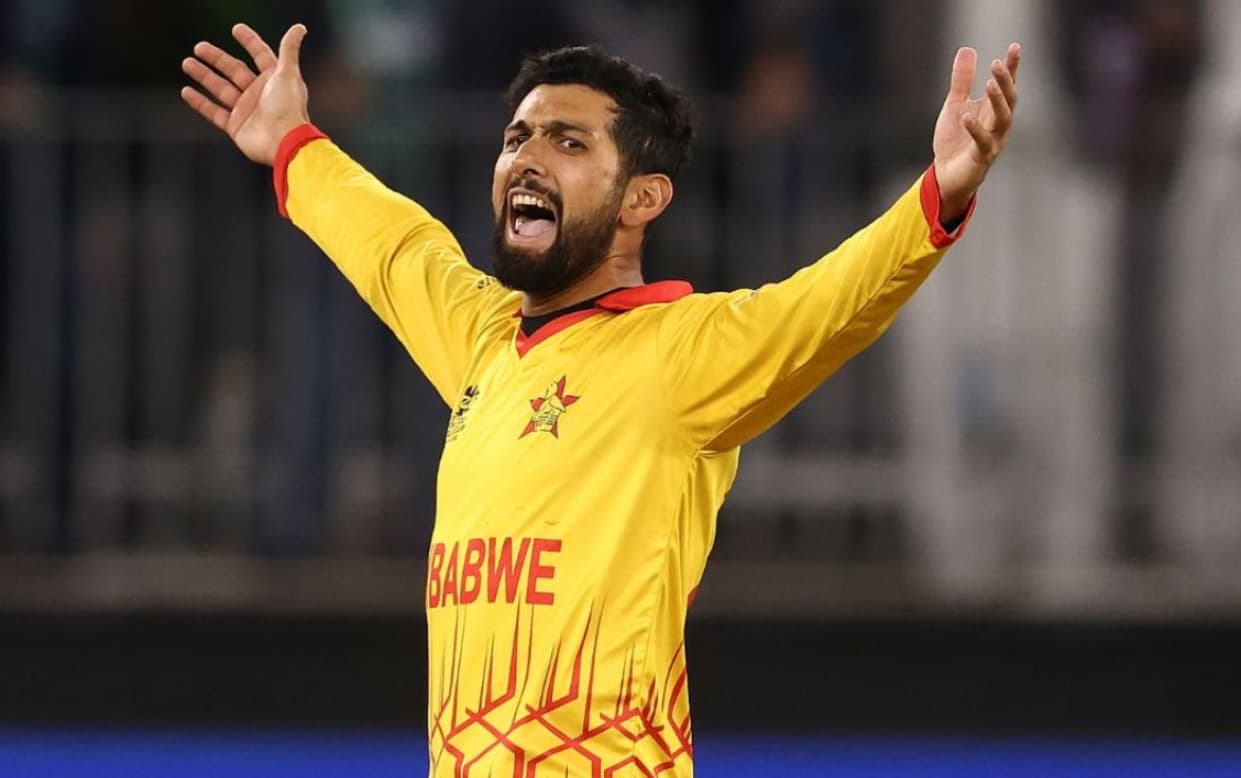
| 2 | Sikandar Raza | 39 years, 301 days | Sri Lanka | 2026 | Group Stage |
| 3 | Shoaib Malik | 39 years, 279 days | Scotland | 2021 | Group Stage |
| 4 | Tillakaratne Dilshan | 39 years, 155 days | Afghanistan | 2016 | Group Stage |
| 5 | David Wiese | 39 years, 15 days | Oman | 2024 | Group Stage |
Top Five Oldest Players to Win Player of the Match Awards in T20 World Cup History
5. David Wiese vs Oman – 39 years, 15 days (2024)
- Match Situation
Namibia faced Oman in a low-scoring contest that remained deadlocked after regulation overs. The match extended to a Super Over finish requiring extreme composure and tactical precision from both teams.
- Bowling Impact
Wiese claimed three key wickets during regulation overs, restricting Oman’s scoring on a difficult surface. Returned for controlled final over execution during the Super Over, maintaining tight lines while dismissing a crucial batsman.
- Why It Mattered
Performance showed the value of experience in clutch scenarios where pressure peaks. Wiese’s decision-making under elimination stakes demonstrated how veteran composure separates teams during nerve-wracking finishes.
4. Tillakaratne Dilshan vs Afghanistan – 39 years, 155 days (2016)
- Chase Context
Sri Lanka required 154 runs on a slow, gripping Eden Gardens pitch where timing demanded precision. Dilshan anchored the chase, recognizing when acceleration served strategic purposes versus maintaining steady run flow.
- Batting Performance
His unbeaten 83 off 56 deliveries featured eight fours and three sixes while maintaining a consistent run flow. Reached fifty in 37 balls, balancing controlled aggression with strike rotation on challenging surface conditions.
- Tournament Significance
The innings provided stability during Sri Lanka’s early tournament phase in 2016. Dilshan’s veteran presence steadied the chase when complications threatened, showcasing how experience guides tactical execution under group-stage pressure.
3. Shoaib Malik vs Scotland – 39 years, 279 days (2021)
- Entry Moment
Malik entered during the middle overs when Pakistan required rapid acceleration against Scotland. The situation demanded immediate impact rather than gradual momentum building, testing instant execution capabilities.
- Explosive Knock
Smashed an unbeaten 54 off just 18 balls, achieving a strike rate exceeding 300. The explosive innings ended his 12-year World Cup fifty drought while featuring clean hitting and intelligent shot selection.
- Experience Factor
Performance demonstrated controlled finishing under tournament pressure. Malik’s tactical intelligence converted momentum into match dominance, reinforcing Pakistan’s finishing depth during their 2021 campaign.
2. Sikandar Raza vs Sri Lanka – 39 years, 301 days (2026)
- Pressure Scenario
Zimbabwe confronted an increasing required rate on a slow Colombo surface where boundaries arrived infrequently. Raza entered when the chase threatened drifting beyond reach, requiring a calculated counterattack without inviting dismissal through recklessness.
- Counterattack Strategy
Blasted 45 off 26 balls, specifically targeting spin bowlers through favorable matchup exploitation. Clean hitting combined with smart placement ensured the asking rate remained manageable throughout his decisive partnership.
- Leadership Value
Game awareness managed chase tempo with calculated aggression and tactical intelligence. Performance helped Zimbabwe finish unbeaten through the T20 World Cup 2026 group stages, demonstrating leadership influence under pressure.
1. Sanath Jayasuriya vs West Indies – 39 years, 345 days (2009)
- Opening Statement
Jayasuriya launched aggressive powerplay boundaries at Trent Bridge, establishing innings momentum immediately. His attacking intent signaled Sri Lanka’s determination to post formidable totals rather than cautious accumulation.
- Match-Winning Innings
Blasted 81 off 47 deliveries, featuring 10 boundaries and three sixes. The explosive knock propelled Sri Lanka to 192, a total that proved insurmountable for the West Indies under prevailing match conditions.
- Legacy Moment
At 39 years and 345 days, Jayasuriya produced one of the oldest impactful batting displays in tournament history. The performance cemented his legacy while demonstrating how attacking intelligence combined with experience dominates T20 formats effectively.
Conclusion:
The oldest players to win player of the match awards in T20 World Cup history establish clear patterns connecting sustained fitness, tactical intelligence, and execution consistency across tournament editions from 2009 to 2026.
These performances prove that competitive relevance extends beyond conventional retirement ages when preparation meets elite opportunity.
Experience accelerates situation analysis and strategic decision-making under extreme pressure conditions.
Physical conditioning programs enable career extensions while mental maturity separates capable performers from match-winners during group-stage elimination scenarios.
Veterans aged 39+ consistently delivered when tournament stakes demanded maximum performance levels.
Their achievements demonstrate that age enhances rather than diminishes competitive value when intelligent preparation combines with tactical adaptation.
- Age does not restrict elite performance – Modern conditioning enables competitive standards maintenance into late thirties across demanding formats.
- Experience enhances situational judgment – Veterans recognize tactical opportunities and momentum shifts faster under tournament pressure conditions.
- Tactical maturity shapes match outcomes – Strategic execution transforms tight contests into controlled victories through intelligent decision-making processes.
- Fitness enables extended careers – Sustained physical preparation allows competitive relevance beyond traditional retirement timelines in professional cricket.
- Pressure tournaments reward composure – Group-stage environments amplify experience advantages where mental strength outweighs raw athletic capabilities decisively.
Also Check:
About the Author